
Celebrity Life
DesignInspire Virtual Fair Sheds Lights on The Vital Importance of Creativity Amid Global Pandemic

Creativity and its power to connect people and places have never been more vital to communities all over the world than in 2020. DesignInspire Online, a virtual fair organised by the Hong Kong Trade Development Council (HKTDC) that was recently held, celebrated this concept with a diverse showcase of global designs from Hong Kong, Mainland China, Japan, Korea and Australia to both trade and public visitors.
This year's theme, “Design for Good”, was chosen with the intent of delivering positive energy to societies and inspire through innovations and world-class designs that can help overcome adversity amid the Covid-19 pandemic.
The focus of most projects led by Hong Kong designers was in fact to create furniture and domestic gadgets that could improve the stay-home-experience and help optimise spaces while exploring global creativity and making the most of local excellence in design. The works also exalt the local traditions and heritage, like the “Made to measure” paintings on iron roller-shutter doors telling the city's stories through powerful symbols.


DesignInspire Online also featured numerous interactive projects and games aimed at combining creativity with technology and innovation, possibly highlighting one of the most important themes explored by creatives all over the world during the pandemic. Additionally, the fair covered timely topics like enhancing the digital customer experience and engagement as well as industry-specific trends such as video marketing and practical tips for designers to improve their business models.
To add to the charm and relevance, the virtual event curated a series of exclusive designs from all over the world through the overseas pavilions.
The Japan Pavilion
The most remarkable elements of Japanese luxury residencies, office buildings and retail spaces as well as high quality materials are brought together in the Japan Pavilion. Additionally, the virtual booth, designed by award-winning Masaaki Hisatakeh Architects, also aims at connecting the country's professionals and ideas of functionality and innovation with Hong Kong's architects.

Established in 1870, Ikuta is a leader in the flooring industry. Some of the company's premium composite flooring, a blend of tradition and innovations, has been used in many high-end developments like the residences at the Ritz-Carlton Tokyo. Among its signature original products there's Takumi Japan, the world’s first flooring incorporating gold leaf, created in collaboration with traditional artisans in Kyoto and Kanazawa

Hirata Tiles, which recently celebrated its 100th anniversary in 2019, is a specialised trading company that sells and applies construction materials. Thanks to innovative and creative tile compositions that made the most of natural light and colours, the Japanese company is considered a leader in creating effortlessly stylish and vibrant spaces.
The Melbourne Pavilion
Melbourne, known as Australia's creative capital and one of the world's most liveable cities, is home to a growing and vibrant community of designers. The city is also known for the importance it gives to the creative industries, constantly exploring and making the most of the economic, cultural and social powers of design. The Melbourne pavilion is a tribute to this attitude and artistic diversity.

LCI Melbourne is a progressive art and design Institute and a world-class leader in creative education. Based in a heritage building in Collingwood, the heart of Melbourne, LCIM is part of a global network of 23 design institutes born over 60 years ago.
Eness is famous for its unique art sculptures that have appeared in the Melbourne Museum, Cabrini Hospital and other famous locations around the city. Making use of technologies like 3D project mapping and LED lights, each work, created by an esteemed team of writers, musicians, artists, software engineers, and industrial designers, has an interactive element to stimulate the imagination and to encourage engagement.
For more information visit DesignInspire. Access to DesignInspire ONLINE is free for both trade and public visitors
The post DesignInspire Virtual Fair Sheds Lights on The Vital Importance of Creativity Amid Global Pandemic appeared first on Prestige Online - Hong Kong.
DesignInspire Virtual Fair Sheds Lights on The Vital Importance of Creativity Amid Global Pandemic
Creativity and its power to connect people and places have never been more vital to communities all over the world than in 2020. DesignInspire Online, a virtual fair organised by the Hong Kong Trade Development Council (HKTDC) that was recently held, celebrated this concept with a diverse showcase of global designs from Hong Kong, Mainland China, Japan, Korea and Australia to both trade and public visitors.
This year's theme, “Design for Good”, was chosen with the intent of delivering positive energy to societies and inspire through innovations and world-class designs that can help overcome adversity amid the Covid-19 pandemic.
The focus of most projects led by Hong Kong designers was in fact to create furniture and domestic gadgets that could improve the stay-home-experience and help optimise spaces while exploring global creativity and making the most of local excellence in design. The works also exalt the local traditions and heritage, like the “Made to measure” paintings on iron roller-shutter doors telling the city's stories through powerful symbols.
DesignInspire Online also featured numerous interactive projects and games aimed at combining creativity with technology and innovation, possibly highlighting one of the most important themes explored by creatives all over the world during the pandemic. Additionally, the fair covered timely topics like enhancing the digital customer experience and engagement as well as industry-specific trends such as video marketing and practical tips for designers to improve their business models.
To add to the charm and relevance, the virtual event curated a series of exclusive designs from all over the world through the overseas pavilions.
The Japan Pavilion
The most remarkable elements of Japanese luxury residencies, office buildings and retail spaces as well as high quality materials are brought together in the Japan Pavilion. Additionally, the virtual booth, designed by award-winning Masaaki Hisatakeh Architects, also aims at connecting the country's professionals and ideas of functionality and innovation with Hong Kong's architects.
Established in 1870, Ikuta is a leader in the flooring industry. Some of the company's premium composite flooring, a blend of tradition and innovations, has been used in many high-end developments like the residences at the Ritz-Carlton Tokyo. Among its signature original products there's Takumi Japan, the world’s first flooring incorporating gold leaf, created in collaboration with traditional artisans in Kyoto and Kanazawa
Hirata Tiles, which recently celebrated its 100th anniversary in 2019, is a specialised trading company that sells and applies construction materials. Thanks to innovative and creative tile compositions that made the most of natural light and colours, the Japanese company is considered a leader in creating effortlessly stylish and vibrant spaces.
The Melbourne Pavilion
Melbourne, known as Australia's creative capital and one of the world's most liveable cities, is home to a growing and vibrant community of designers. The city is also known for the importance it gives to the creative industries, constantly exploring and making the most of the economic, cultural and social powers of design. The Melbourne pavilion is a tribute to this attitude and artistic diversity.
LCI Melbourne is a progressive art and design Institute and a world-class leader in creative education. Based in a heritage building in Collingwood, the heart of Melbourne, LCIM is part of a global network of 23 design institutes born over 60 years ago.
Eness is famous for its unique art sculptures that have appeared in the Melbourne Museum, Cabrini Hospital and other famous locations around the city. Making use of technologies like 3D project mapping and LED lights, each work, created by an esteemed team of writers, musicians, artists, software engineers, and industrial designers, has an interactive element to stimulate the imagination and to encourage engagement.
For more information visit DesignInspire. Access to DesignInspire ONLINE is free for both trade and public visitors
The post DesignInspire Virtual Fair Sheds Lights on The Vital Importance of Creativity Amid Global Pandemic appeared first on Prestige Online - Hong Kong.
Top 5 type of houses in the USA

Top 5 type of house in the USA⇒ What are the type of house that American people choose the most? What type of design fits better for your current or next project? We will give you some help in this next article.
Choosing your next house is always something very important, and in nowadays you’ve got so many options that you can choose whatever you like the most.
Continue reading Top 5 type of houses in the USA at Luxxu Blog.
Meet our Designer – João Barros

Meet our Designer – João Barros ⇒ Today we bring you an interview with our brand leader and Head Designer João Barros. We tried to decipher how this inspiration machine works, which not only led to the evolution and growth of all our pieces here at LUXXU but also served as support for several sister brand openings like PULLCAST, MYSA, and MAISON VALENTINA. Stay with us and discover the life of the designer behind some of the most emblematic pieces of luxury furniture
.
Continue reading Meet our Designer – João Barros at Luxxu Blog.
Timeless Design Trends – Top 5
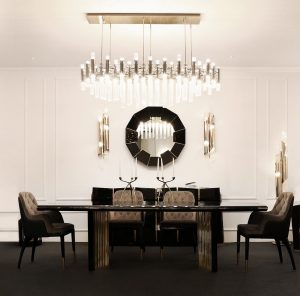
Timeless design trends for your next project⇒ Some trends are born to fade, others enter the interiors canon and will remain fixed there until the end of time, and these are the classics you want to hone in on. These timeless design trends deserve your attention and while they may feel like fleeting fads now, you can trust that in time they won’t have soured.
Continue reading Timeless Design Trends – Top 5 at Luxxu Blog.
We Delve Into Cartier’s Fascinating History in Art De Vivre and Everyday Objects

The enchanting spirit of Cartier extends beyond its magnificent jewels and watches into the everyday life.
“In fact, we do not only produce luxury jewellery. I would say, monsieur, that jewellery like ours is as capable of adorning a woman’s shoulders with a dazzling necklace as it is of filling her handbag with a powder compact, a mirror, a small comb and even business cards, all stamped with the same seal of originality and art,” says Louis Cartier in a press interview.
While the legendary maison needs no introduction, especially to savvy jewellery and watch collectors, its history in art de vivre by comparison is little-known but no less fascinating. From play to travel, tableware to the art of hospitality, Cartier has, for over a century, been bringing style and savoir faire to enliven everyday objects.
[caption id="attachment_212697" align="aligncenter" width="781"] Chick, Cartier circa 1906.[/caption]
After all, the art of fine jewellery is closely intertwined with the art of creating precious objects that accompany the upper crust during the turn of the century. From the very beginning, alongside its jewels, Cartier had crafted ornaments in silver, bronze, ivory, porcelain, as well as carved hard-stone objects for a clientele that included Empress Eugénie, the Prince of Wagram and the Count of Paris. “Since 1880, Cartier has been interested in everyday objects,” says Pierre Rainero, Director of Image, Style and Heritage at Cartier International.
The house’s passion for art de vivre deepened during the 1900 Universal Exhibition, when Louis and Pierre Cartier discovered the work of guilloché enamel by the Russian goldsmith Peter Carl Fabergé. Inspired by his engraving technique and moiré (silk) enamel style, Louis Cartier developed his own enamel colour palette with contrasting hues of blue and mauve or blue and green to decorate frames, bells and powder cases.
During his travels through Russia in 1904, Pierre Cartier discovered artisans who carved small hard-stone animals that were hugely popular in the tzar’s empire. They began to supply Cartier with precious ornaments in agate, quartz, rhodolite, purpurin and obsidian that the house further interpreted with realism and enhanced with precious gemstones. From a winged procession of ibises, owls, cranes and lovebirds to pigs, bulldogs and mice, the maison inventory had counted 200 such creations in 1907.
[caption id="attachment_212699" align="aligncenter" width="1024"] Backgammon game set, Cartier circa 1930.[/caption]
Dedicating itself to developing more accessible accessories and objects during the post-war boom, Cartier created the S for Silver department entrusted to Jeanne Toussaint in 1925. Ordinary, functional objects were made precious and desirable – a gold pocket corkscrew, a finely decorated picnic set or an ingenious silver cocktail shaker which, when rotated, revealed recipes in its small window apertures.
These items contributed to the new art of luxury travel where form, function and ergonomics converged. Making it happen was an array of artisans, including porcelain makers, goldsmiths, leather crafters and crystal workers. During that era, Cartier objects covered every aspect of the art de vivre, from the luxurious detailing of tableware to reimagining games with a sophisticated eye.
“These practical, playful, joyful and elegant items were perfectly in tune with the celebratory spirit and chic portability of the Café Society in the 1930s. The materials used to create these precious wood, porcelain or enamel objects met the criteria of elegance and durability, with today’s collections continuing the Cartier tradition,” adds Rainero.
[gallery ids="212709,212700,212701,212702,212703,212704,212705,212706,212707,212708"]
The maison’s spirit endures today through an elegant and beautifully curated selection of daily items. Says Arnaud Carrez, International Marketing and Communications Director of Cartier International, “Linked by their emblematic codes, like the panther or the Cartier box, they echo the House’s most iconic signature features. These stylish objects have that extra something to bring beauty into your life.”
There are four key collections centred around the theme of bringing joy to oneself and others: Decoration, writing, childhood and games. The home décor range spans porcelain trays and vases to lacquered wood music boxes and jewellery cases that are inscribed with the panther, double C or ribbon motifs. The writing range, showcasing notebooks, Santos de Cartier pens and other stationery, is an attractive proposition to revive the lost art of penmanship.
The Games range flaunts a solitaire set made of corian and glass, and a box of whimsically decorated wooden blocks. The Baby range boasts animal-motif gifts in sterling silver, such as rabbit ear-shaped spoons and a rattle, as well as a cashmere blanket. In addition, Cartier’s festive offerings of snowglobes and Christmas tree ornaments are simply too exquisite for the lavish gifter to ignore.
This story first appeared on Prestige Singapore
(All images: Cartier)
The post We Delve Into Cartier’s Fascinating History in Art De Vivre and Everyday Objects appeared first on Prestige Online - Hong Kong.
We Delve Into Cartier’s Fascinating History in Art De Vivre and Everyday Objects
The enchanting spirit of Cartier extends beyond its magnificent jewels and watches into the everyday life.
“In fact, we do not only produce luxury jewellery. I would say, monsieur, that jewellery like ours is as capable of adorning a woman’s shoulders with a dazzling necklace as it is of filling her handbag with a powder compact, a mirror, a small comb and even business cards, all stamped with the same seal of originality and art,” says Louis Cartier in a press interview.
While the legendary maison needs no introduction, especially to savvy jewellery and watch collectors, its history in art de vivre by comparison is little-known but no less fascinating. From play to travel, tableware to the art of hospitality, Cartier has, for over a century, been bringing style and savoir faire to enliven everyday objects.
[caption id="attachment_212697" align="aligncenter" width="781"] Chick, Cartier circa 1906.[/caption]
After all, the art of fine jewellery is closely intertwined with the art of creating precious objects that accompany the upper crust during the turn of the century. From the very beginning, alongside its jewels, Cartier had crafted ornaments in silver, bronze, ivory, porcelain, as well as carved hard-stone objects for a clientele that included Empress Eugénie, the Prince of Wagram and the Count of Paris. “Since 1880, Cartier has been interested in everyday objects,” says Pierre Rainero, Director of Image, Style and Heritage at Cartier International.
The house’s passion for art de vivre deepened during the 1900 Universal Exhibition, when Louis and Pierre Cartier discovered the work of guilloché enamel by the Russian goldsmith Peter Carl Fabergé. Inspired by his engraving technique and moiré (silk) enamel style, Louis Cartier developed his own enamel colour palette with contrasting hues of blue and mauve or blue and green to decorate frames, bells and powder cases.
During his travels through Russia in 1904, Pierre Cartier discovered artisans who carved small hard-stone animals that were hugely popular in the tzar’s empire. They began to supply Cartier with precious ornaments in agate, quartz, rhodolite, purpurin and obsidian that the house further interpreted with realism and enhanced with precious gemstones. From a winged procession of ibises, owls, cranes and lovebirds to pigs, bulldogs and mice, the maison inventory had counted 200 such creations in 1907.
[caption id="attachment_212699" align="aligncenter" width="1024"] Backgammon game set, Cartier circa 1930.[/caption]
Dedicating itself to developing more accessible accessories and objects during the post-war boom, Cartier created the S for Silver department entrusted to Jeanne Toussaint in 1925. Ordinary, functional objects were made precious and desirable – a gold pocket corkscrew, a finely decorated picnic set or an ingenious silver cocktail shaker which, when rotated, revealed recipes in its small window apertures.
These items contributed to the new art of luxury travel where form, function and ergonomics converged. Making it happen was an array of artisans, including porcelain makers, goldsmiths, leather crafters and crystal workers. During that era, Cartier objects covered every aspect of the art de vivre, from the luxurious detailing of tableware to reimagining games with a sophisticated eye.
“These practical, playful, joyful and elegant items were perfectly in tune with the celebratory spirit and chic portability of the Café Society in the 1930s. The materials used to create these precious wood, porcelain or enamel objects met the criteria of elegance and durability, with today’s collections continuing the Cartier tradition,” adds Rainero.
[gallery ids="212709,212700,212701,212702,212703,212704,212705,212706,212707,212708"]
The maison’s spirit endures today through an elegant and beautifully curated selection of daily items. Says Arnaud Carrez, International Marketing and Communications Director of Cartier International, “Linked by their emblematic codes, like the panther or the Cartier box, they echo the House’s most iconic signature features. These stylish objects have that extra something to bring beauty into your life.”
There are four key collections centred around the theme of bringing joy to oneself and others: Decoration, writing, childhood and games. The home décor range spans porcelain trays and vases to lacquered wood music boxes and jewellery cases that are inscribed with the panther, double C or ribbon motifs. The writing range, showcasing notebooks, Santos de Cartier pens and other stationery, is an attractive proposition to revive the lost art of penmanship.
The Games range flaunts a solitaire set made of corian and glass, and a box of whimsically decorated wooden blocks. The Baby range boasts animal-motif gifts in sterling silver, such as rabbit ear-shaped spoons and a rattle, as well as a cashmere blanket. In addition, Cartier’s festive offerings of snowglobes and Christmas tree ornaments are simply too exquisite for the lavish gifter to ignore.
This story first appeared on Prestige Singapore
(All images: Cartier)
The post We Delve Into Cartier’s Fascinating History in Art De Vivre and Everyday Objects appeared first on Prestige Online - Hong Kong.
We Delve Into Cartier’s Fascinating History in Art De Vivre and Everyday Objects
The enchanting spirit of Cartier extends beyond its magnificent jewels and watches into the everyday life.
“In fact, we do not only produce luxury jewellery. I would say, monsieur, that jewellery like ours is as capable of adorning a woman’s shoulders with a dazzling necklace as it is of filling her handbag with a powder compact, a mirror, a small comb and even business cards, all stamped with the same seal of originality and art,” says Louis Cartier in a press interview.
While the legendary maison needs no introduction, especially to savvy jewellery and watch collectors, its history in art de vivre by comparison is little-known but no less fascinating. From play to travel, tableware to the art of hospitality, Cartier has, for over a century, been bringing style and savoir faire to enliven everyday objects.
[caption id="attachment_212697" align="aligncenter" width="781"] Chick, Cartier circa 1906.[/caption]
After all, the art of fine jewellery is closely intertwined with the art of creating precious objects that accompany the upper crust during the turn of the century. From the very beginning, alongside its jewels, Cartier had crafted ornaments in silver, bronze, ivory, porcelain, as well as carved hard-stone objects for a clientele that included Empress Eugénie, the Prince of Wagram and the Count of Paris. “Since 1880, Cartier has been interested in everyday objects,” says Pierre Rainero, Director of Image, Style and Heritage at Cartier International.
The house’s passion for art de vivre deepened during the 1900 Universal Exhibition, when Louis and Pierre Cartier discovered the work of guilloché enamel by the Russian goldsmith Peter Carl Fabergé. Inspired by his engraving technique and moiré (silk) enamel style, Louis Cartier developed his own enamel colour palette with contrasting hues of blue and mauve or blue and green to decorate frames, bells and powder cases.
During his travels through Russia in 1904, Pierre Cartier discovered artisans who carved small hard-stone animals that were hugely popular in the tzar’s empire. They began to supply Cartier with precious ornaments in agate, quartz, rhodolite, purpurin and obsidian that the house further interpreted with realism and enhanced with precious gemstones. From a winged procession of ibises, owls, cranes and lovebirds to pigs, bulldogs and mice, the maison inventory had counted 200 such creations in 1907.
[caption id="attachment_212699" align="aligncenter" width="1024"] Backgammon game set, Cartier circa 1930.[/caption]
Dedicating itself to developing more accessible accessories and objects during the post-war boom, Cartier created the S for Silver department entrusted to Jeanne Toussaint in 1925. Ordinary, functional objects were made precious and desirable – a gold pocket corkscrew, a finely decorated picnic set or an ingenious silver cocktail shaker which, when rotated, revealed recipes in its small window apertures.
These items contributed to the new art of luxury travel where form, function and ergonomics converged. Making it happen was an array of artisans, including porcelain makers, goldsmiths, leather crafters and crystal workers. During that era, Cartier objects covered every aspect of the art de vivre, from the luxurious detailing of tableware to reimagining games with a sophisticated eye.
“These practical, playful, joyful and elegant items were perfectly in tune with the celebratory spirit and chic portability of the Café Society in the 1930s. The materials used to create these precious wood, porcelain or enamel objects met the criteria of elegance and durability, with today’s collections continuing the Cartier tradition,” adds Rainero.
[gallery ids="212709,212700,212701,212702,212703,212704,212705,212706,212707,212708"]
The maison’s spirit endures today through an elegant and beautifully curated selection of daily items. Says Arnaud Carrez, International Marketing and Communications Director of Cartier International, “Linked by their emblematic codes, like the panther or the Cartier box, they echo the House’s most iconic signature features. These stylish objects have that extra something to bring beauty into your life.”
There are four key collections centred around the theme of bringing joy to oneself and others: Decoration, writing, childhood and games. The home décor range spans porcelain trays and vases to lacquered wood music boxes and jewellery cases that are inscribed with the panther, double C or ribbon motifs. The writing range, showcasing notebooks, Santos de Cartier pens and other stationery, is an attractive proposition to revive the lost art of penmanship.
The Games range flaunts a solitaire set made of corian and glass, and a box of whimsically decorated wooden blocks. The Baby range boasts animal-motif gifts in sterling silver, such as rabbit ear-shaped spoons and a rattle, as well as a cashmere blanket. In addition, Cartier’s festive offerings of snowglobes and Christmas tree ornaments are simply too exquisite for the lavish gifter to ignore.
This story first appeared on Prestige Singapore
(All images: Cartier)
The post We Delve Into Cartier’s Fascinating History in Art De Vivre and Everyday Objects appeared first on Prestige Online - Hong Kong.
Top 5 Chicago Interior Designers

The 5 Chicago Interior Designers⇒ The “windy city” is really a treasure when it comes to Interior Designer and we will show what can be the better ones for your next project
Chicago is one of the most populous cities in the United States. Today, the current architectural scenario comprises of structures which belong to the multicultural heritage of the city. In this article we pretend to show 5 interior designers that we believe to be the best ones for your next design project.
Continue reading Top 5 Chicago Interior Designers at Luxxu Blog.
Feast Your Eyes on the Amazing Views From the World’s Tallest Skyscrapers

Once upon a time, skyscrapers were places of commerce, home to floors and floors of offices and perhaps the occasional hotel — but, oh, how things have changed.
Across the globe, an ever-growing crop of super tall residential towers is on the rise, as leading developers, architects and designers collaborate on projects that simultaneously transform city skylines and property markets with record-breaking heights and prices.
These days, in cities like New York, Dubai and Moscow, wealth and status go hand in hand with extreme elevation as towers top out at astonishing heights that wouldn’t have even been possible a few years ago. Growing in popularity around the world, these staggeringly tall feats of engineering are only expected to multiply in the years ahead, catering to superrich buyers with a taste for owning the best views money can buy.
For a taste of the high life, here’s a look at the 10 of the world's tallest residential skyscrapers in the world — for now, at least.
Central Park Tower, New York City

Height: 1,549 feet / 472 metres
Year of completion: 2020
Officially the tallest residential building in the world, Central Park Tower is also the second-tallest structure in New York City behind One World Trade Center — hence the unobstructed 360-degree views. Located on a strip of exorbitantly priced properties known as Billionaire’s Row, the tower has 179 units estimated at a collective US$4 billion, making it the most expensive condominium project in the United States.
111 West 57th Street, New York City

Height: 1,427 feet / 435 metres
Year of completion: 2020
You don’t have to look far for the second-tallest residential skyscraper: It’s Central Park Tower’s neighbour on Billionaire’s Row. Also known as Steinway Tower, 111 West 57th Street stands out for being skinny — it’s only 60 feet wide. Positioned to perfectly align with the centre of Central Park, the building currently has two 7,130-square-foot penthouses on the market, priced at a cool US$66 million each.
432 Park Avenue, New York City

Height: 1,396 feet / 425.5 metres
Year of completion: 2015
It wasn’t long ago that 432 Park Avenue was the tallest residential building in the world — a position it held for five years — but it’s no less stunning now that it’s in third place. Designed by Rafael Viñoly, the tower is an exercise in simplicity and geometry, with six windows each measuring 10 by 10 feet lining each side of the building on every storey. The building’s’ developers benefited from completing the project during better economic times: the 96th-floor penthouse fetched US$86.77 million in 2016.
Princess Tower, Dubai

Height: 1,356 feet / 413 metres
Year of completion: 2012
Standing 101 storeys tall, Princess Tower is located in the centre of Dubai Marina and previously held the title of world’s tallest residential tower from 2012-2015. Housing a staggering 763 units — from one-bedroom apartments to five-bedroom penthouses — the tower is located opposite the Dubai International Marina Club and even features an observation deck on the 97th floor, where residents can look out at the glittering skyline.
23 Marina, Dubai

Height: 1,287 feet / 392 metres
Year of completion: 2012
Prior to the completion of neighbouring Princess Tower, 23 Marina had the distinction of being the world’s tallest residential skyscraper. Its 289 apartments are spread across 88 floors, where residents enjoy views of the Dubai skyline or the manmade island Palm Jumeirah. Even in a city of stunning skyscrapers, 23 Marina stands out with its unique geometric designs, including an octagonal shape and triangular spires.
Burj Mohammed Bin Rashid, Abu Dhabi

Height: 1,251 feet / 381 metres
Year of completion: 2014
The tallest building in Abu Dhabi, 92-storey Burj Mohammed Bin Rashid is located on The Corniche, an 8-km road with cycling area, pedestrian pathways and Corniche Beach; the tower itself is connected to the World Trade Center. The tower holds 474 units, and amenities include spacious balconies overlooking the beach, a 90th-storey gym, a children’s play area and an indoor terrace garden.
Elite Residence, Dubai

Height: 1,248 feet / 380 metres
Year of completion: 2012
Yet another super tall structure in the Dubai Marina skyline, Elite Residence has 703 residential units including one- to four-bedroom apartments, three- to four-bedroom penthouses and one palatial five-bedroom penthouse occupying the top floor. There’s plenty to keep residents busy: a fully equipped gym with views of Palm Jumeirah and the beach, a tennis court, two indoor pools, one outdoor pool and a sundeck.
The Torch, Dubai

Height: 1,155 feet / 352 metres
Year of completion: 2011
Like many other buildings before it, The Torch was once the tallest residential tower in the world. At 84 storeys high, it’s still a juggernaut, one with 682 units to boot. Views are sensational from the apartments as well as from the large outdoor pool and private deck overlooking the city and the entire length of Dubai Marina.
Neva Towers 2, Moscow

Height: 1,132 feet / 345 metres
Year of completion: 2020
In case you were thinking that all of the world’s tallest residences are either in New York City or the Middle East, it isn’t true. The taller of two apartment buildings forming a sumptuous complex, Neva Towers 2 is located in the centre of Moscow and is the first eco-friendly building in Russia to be granted LEED certification. Residents have access to a spa, fitness centre, private cinema, squash courts and a private park with a panoramic pool.
LCT The Sharp Residential Tower A, Busan

Height: 1,113 feet / 339 metres
Year of completion: 2019
Part of a three-building complex comprising one commercial tower and two apartment buildings, LCT The Sharp Residential Tower A is the slightly taller of the latter pair. Aside from being the tallest residential building in South Korea, it’s the third-tallest building overall in the country and its 85 storeys on the waterfront afford residents unbeatable views of the city and the sea.
The post Feast Your Eyes on the Amazing Views From the World’s Tallest Skyscrapers appeared first on Prestige Online - Hong Kong.
Feast Your Eyes on the Amazing Views From the World’s Tallest Skyscrapers
Once upon a time, skyscrapers were places of commerce, home to floors and floors of offices and perhaps the occasional hotel — but, oh, how things have changed.
Across the globe, an ever-growing crop of super tall residential towers is on the rise, as leading developers, architects and designers collaborate on projects that simultaneously transform city skylines and property markets with record-breaking heights and prices.
These days, in cities like New York, Dubai and Moscow, wealth and status go hand in hand with extreme elevation as towers top out at astonishing heights that wouldn’t have even been possible a few years ago. Growing in popularity around the world, these staggeringly tall feats of engineering are only expected to multiply in the years ahead, catering to superrich buyers with a taste for owning the best views money can buy.
For a taste of the high life, here’s a look at the 10 of the world's tallest residential skyscrapers in the world — for now, at least.
Central Park Tower, New York City
Height: 1,549 feet / 472 metres
Year of completion: 2020
Officially the tallest residential building in the world, Central Park Tower is also the second-tallest structure in New York City behind One World Trade Center — hence the unobstructed 360-degree views. Located on a strip of exorbitantly priced properties known as Billionaire’s Row, the tower has 179 units estimated at a collective US$4 billion, making it the most expensive condominium project in the United States.
111 West 57th Street, New York City
Height: 1,427 feet / 435 metres
Year of completion: 2020
You don’t have to look far for the second-tallest residential skyscraper: It’s Central Park Tower’s neighbour on Billionaire’s Row. Also known as Steinway Tower, 111 West 57th Street stands out for being skinny — it’s only 60 feet wide. Positioned to perfectly align with the centre of Central Park, the building currently has two 7,130-square-foot penthouses on the market, priced at a cool US$66 million each.
432 Park Avenue, New York City
Height: 1,396 feet / 425.5 metres
Year of completion: 2015
It wasn’t long ago that 432 Park Avenue was the tallest residential building in the world — a position it held for five years — but it’s no less stunning now that it’s in third place. Designed by Rafael Viñoly, the tower is an exercise in simplicity and geometry, with six windows each measuring 10 by 10 feet lining each side of the building on every storey. The building’s’ developers benefited from completing the project during better economic times: the 96th-floor penthouse fetched US$86.77 million in 2016.
Princess Tower, Dubai
Height: 1,356 feet / 413 metres
Year of completion: 2012
Standing 101 storeys tall, Princess Tower is located in the centre of Dubai Marina and previously held the title of world’s tallest residential tower from 2012-2015. Housing a staggering 763 units — from one-bedroom apartments to five-bedroom penthouses — the tower is located opposite the Dubai International Marina Club and even features an observation deck on the 97th floor, where residents can look out at the glittering skyline.
23 Marina, Dubai
Height: 1,287 feet / 392 metres
Year of completion: 2012
Prior to the completion of neighbouring Princess Tower, 23 Marina had the distinction of being the world’s tallest residential skyscraper. Its 289 apartments are spread across 88 floors, where residents enjoy views of the Dubai skyline or the manmade island Palm Jumeirah. Even in a city of stunning skyscrapers, 23 Marina stands out with its unique geometric designs, including an octagonal shape and triangular spires.
Burj Mohammed Bin Rashid, Abu Dhabi
Height: 1,251 feet / 381 metres
Year of completion: 2014
The tallest building in Abu Dhabi, 92-storey Burj Mohammed Bin Rashid is located on The Corniche, an 8-km road with cycling area, pedestrian pathways and Corniche Beach; the tower itself is connected to the World Trade Center. The tower holds 474 units, and amenities include spacious balconies overlooking the beach, a 90th-storey gym, a children’s play area and an indoor terrace garden.
Elite Residence, Dubai
Height: 1,248 feet / 380 metres
Year of completion: 2012
Yet another super tall structure in the Dubai Marina skyline, Elite Residence has 703 residential units including one- to four-bedroom apartments, three- to four-bedroom penthouses and one palatial five-bedroom penthouse occupying the top floor. There’s plenty to keep residents busy: a fully equipped gym with views of Palm Jumeirah and the beach, a tennis court, two indoor pools, one outdoor pool and a sundeck.
The Torch, Dubai
Height: 1,155 feet / 352 metres
Year of completion: 2011
Like many other buildings before it, The Torch was once the tallest residential tower in the world. At 84 storeys high, it’s still a juggernaut, one with 682 units to boot. Views are sensational from the apartments as well as from the large outdoor pool and private deck overlooking the city and the entire length of Dubai Marina.
Neva Towers 2, Moscow
Height: 1,132 feet / 345 metres
Year of completion: 2020
In case you were thinking that all of the world’s tallest residences are either in New York City or the Middle East, it isn’t true. The taller of two apartment buildings forming a sumptuous complex, Neva Towers 2 is located in the centre of Moscow and is the first eco-friendly building in Russia to be granted LEED certification. Residents have access to a spa, fitness centre, private cinema, squash courts and a private park with a panoramic pool.
LCT The Sharp Residential Tower A, Busan
Height: 1,113 feet / 339 metres
Year of completion: 2019
Part of a three-building complex comprising one commercial tower and two apartment buildings, LCT The Sharp Residential Tower A is the slightly taller of the latter pair. Aside from being the tallest residential building in South Korea, it’s the third-tallest building overall in the country and its 85 storeys on the waterfront afford residents unbeatable views of the city and the sea.
The post Feast Your Eyes on the Amazing Views From the World’s Tallest Skyscrapers appeared first on Prestige Online - Hong Kong.
Feast Your Eyes on the Amazing Views From the World’s Tallest Skyscrapers
Once upon a time, skyscrapers were places of commerce, home to floors and floors of offices and perhaps the occasional hotel — but, oh, how things have changed.
Across the globe, an ever-growing crop of super tall residential towers is on the rise, as leading developers, architects and designers collaborate on projects that simultaneously transform city skylines and property markets with record-breaking heights and prices.
These days, in cities like New York, Dubai and Moscow, wealth and status go hand in hand with extreme elevation as towers top out at astonishing heights that wouldn’t have even been possible a few years ago. Growing in popularity around the world, these staggeringly tall feats of engineering are only expected to multiply in the years ahead, catering to superrich buyers with a taste for owning the best views money can buy.
For a taste of the high life, here’s a look at the 10 of the world's tallest residential skyscrapers in the world — for now, at least.
Central Park Tower, New York City
Height: 1,549 feet / 472 metres
Year of completion: 2020
Officially the tallest residential building in the world, Central Park Tower is also the second-tallest structure in New York City behind One World Trade Center — hence the unobstructed 360-degree views. Located on a strip of exorbitantly priced properties known as Billionaire’s Row, the tower has 179 units estimated at a collective US$4 billion, making it the most expensive condominium project in the United States.
111 West 57th Street, New York City
Height: 1,427 feet / 435 metres
Year of completion: 2020
You don’t have to look far for the second-tallest residential skyscraper: It’s Central Park Tower’s neighbour on Billionaire’s Row. Also known as Steinway Tower, 111 West 57th Street stands out for being skinny — it’s only 60 feet wide. Positioned to perfectly align with the centre of Central Park, the building currently has two 7,130-square-foot penthouses on the market, priced at a cool US$66 million each.
432 Park Avenue, New York City
Height: 1,396 feet / 425.5 metres
Year of completion: 2015
It wasn’t long ago that 432 Park Avenue was the tallest residential building in the world — a position it held for five years — but it’s no less stunning now that it’s in third place. Designed by Rafael Viñoly, the tower is an exercise in simplicity and geometry, with six windows each measuring 10 by 10 feet lining each side of the building on every storey. The building’s’ developers benefited from completing the project during better economic times: the 96th-floor penthouse fetched US$86.77 million in 2016.
Princess Tower, Dubai
Height: 1,356 feet / 413 metres
Year of completion: 2012
Standing 101 storeys tall, Princess Tower is located in the centre of Dubai Marina and previously held the title of world’s tallest residential tower from 2012-2015. Housing a staggering 763 units — from one-bedroom apartments to five-bedroom penthouses — the tower is located opposite the Dubai International Marina Club and even features an observation deck on the 97th floor, where residents can look out at the glittering skyline.
23 Marina, Dubai
Height: 1,287 feet / 392 metres
Year of completion: 2012
Prior to the completion of neighbouring Princess Tower, 23 Marina had the distinction of being the world’s tallest residential skyscraper. Its 289 apartments are spread across 88 floors, where residents enjoy views of the Dubai skyline or the manmade island Palm Jumeirah. Even in a city of stunning skyscrapers, 23 Marina stands out with its unique geometric designs, including an octagonal shape and triangular spires.
Burj Mohammed Bin Rashid, Abu Dhabi
Height: 1,251 feet / 381 metres
Year of completion: 2014
The tallest building in Abu Dhabi, 92-storey Burj Mohammed Bin Rashid is located on The Corniche, an 8-km road with cycling area, pedestrian pathways and Corniche Beach; the tower itself is connected to the World Trade Center. The tower holds 474 units, and amenities include spacious balconies overlooking the beach, a 90th-storey gym, a children’s play area and an indoor terrace garden.
Elite Residence, Dubai
Height: 1,248 feet / 380 metres
Year of completion: 2012
Yet another super tall structure in the Dubai Marina skyline, Elite Residence has 703 residential units including one- to four-bedroom apartments, three- to four-bedroom penthouses and one palatial five-bedroom penthouse occupying the top floor. There’s plenty to keep residents busy: a fully equipped gym with views of Palm Jumeirah and the beach, a tennis court, two indoor pools, one outdoor pool and a sundeck.
The Torch, Dubai
Height: 1,155 feet / 352 metres
Year of completion: 2011
Like many other buildings before it, The Torch was once the tallest residential tower in the world. At 84 storeys high, it’s still a juggernaut, one with 682 units to boot. Views are sensational from the apartments as well as from the large outdoor pool and private deck overlooking the city and the entire length of Dubai Marina.
Neva Towers 2, Moscow
Height: 1,132 feet / 345 metres
Year of completion: 2020
In case you were thinking that all of the world’s tallest residences are either in New York City or the Middle East, it isn’t true. The taller of two apartment buildings forming a sumptuous complex, Neva Towers 2 is located in the centre of Moscow and is the first eco-friendly building in Russia to be granted LEED certification. Residents have access to a spa, fitness centre, private cinema, squash courts and a private park with a panoramic pool.
LCT The Sharp Residential Tower A, Busan
Height: 1,113 feet / 339 metres
Year of completion: 2019
Part of a three-building complex comprising one commercial tower and two apartment buildings, LCT The Sharp Residential Tower A is the slightly taller of the latter pair. Aside from being the tallest residential building in South Korea, it’s the third-tallest building overall in the country and its 85 storeys on the waterfront afford residents unbeatable views of the city and the sea.
The post Feast Your Eyes on the Amazing Views From the World’s Tallest Skyscrapers appeared first on Prestige Online - Hong Kong.